


01 / BUILD
Shape the Tall-Nose Cab
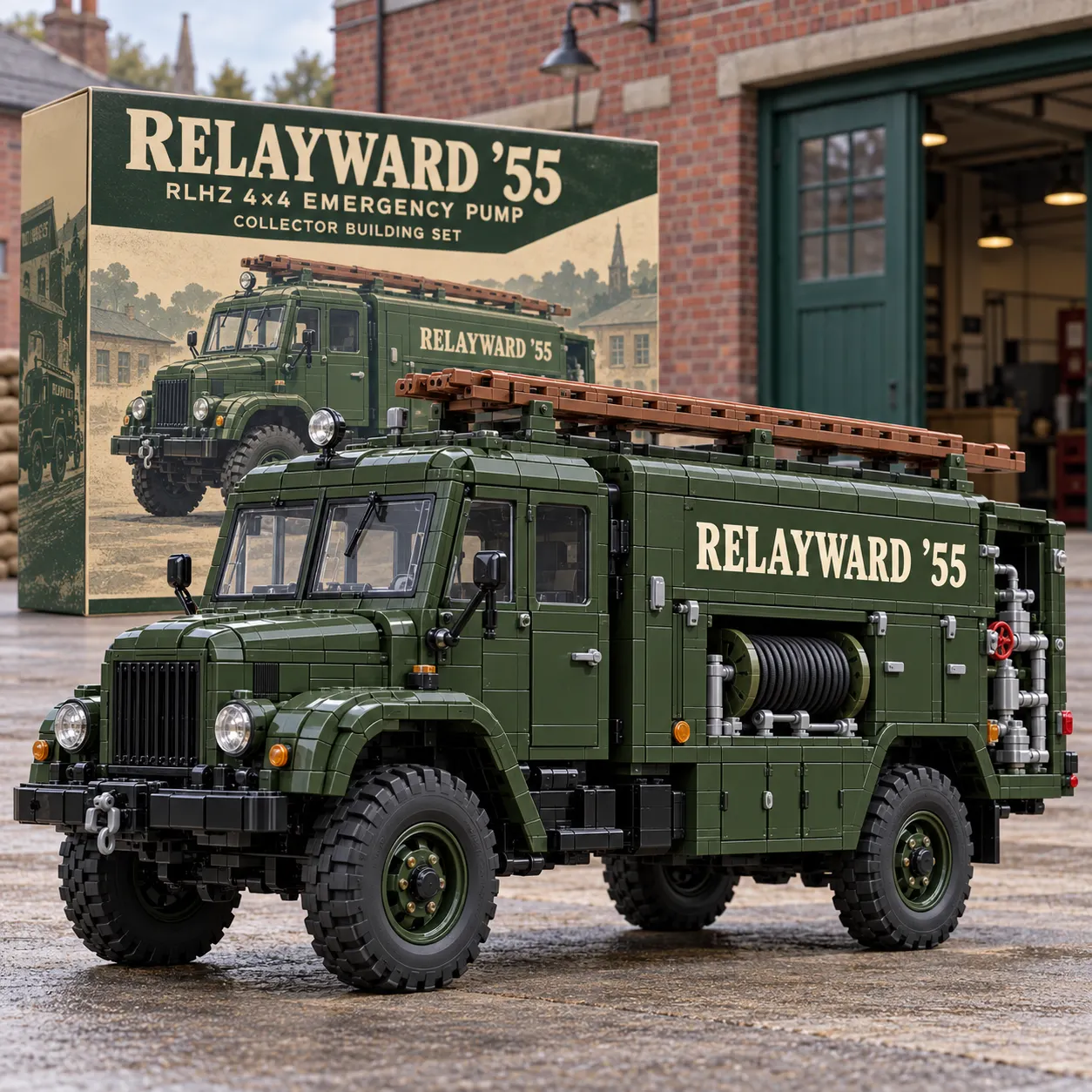
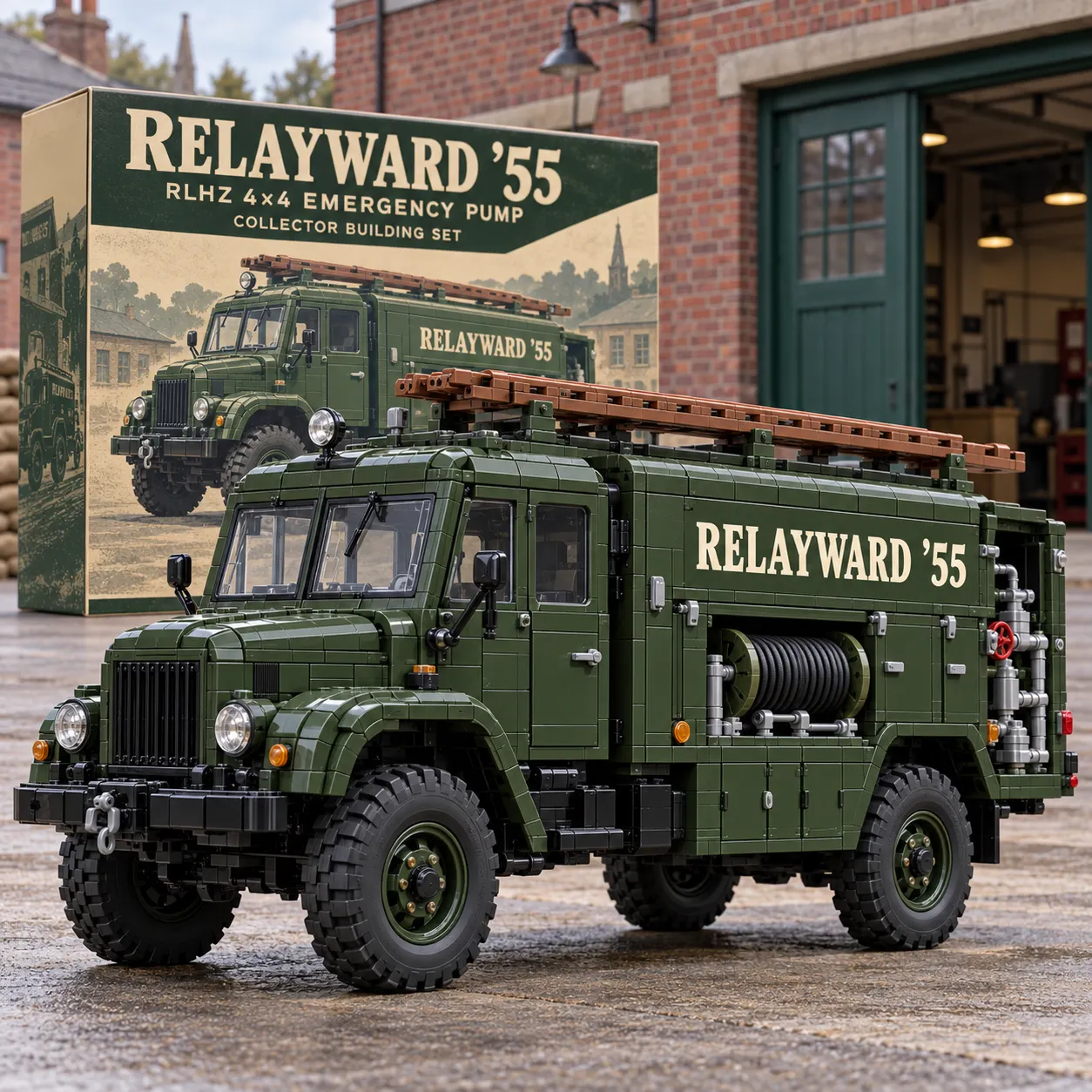
The black vertical grille, round headlamps, and separate fenders give the front end its unmistakably mid-century working-truck character.






Mid-Century British Emergency Pump
In 1950s Britain, civil-defense planners developed rugged mobile pumps to move water where ordinary fire services might be overwhelmed, including across damaged roads and rough ground. The dark bronze-green 4x4 emergency pumps became an unmistakable part of Cold War preparedness.
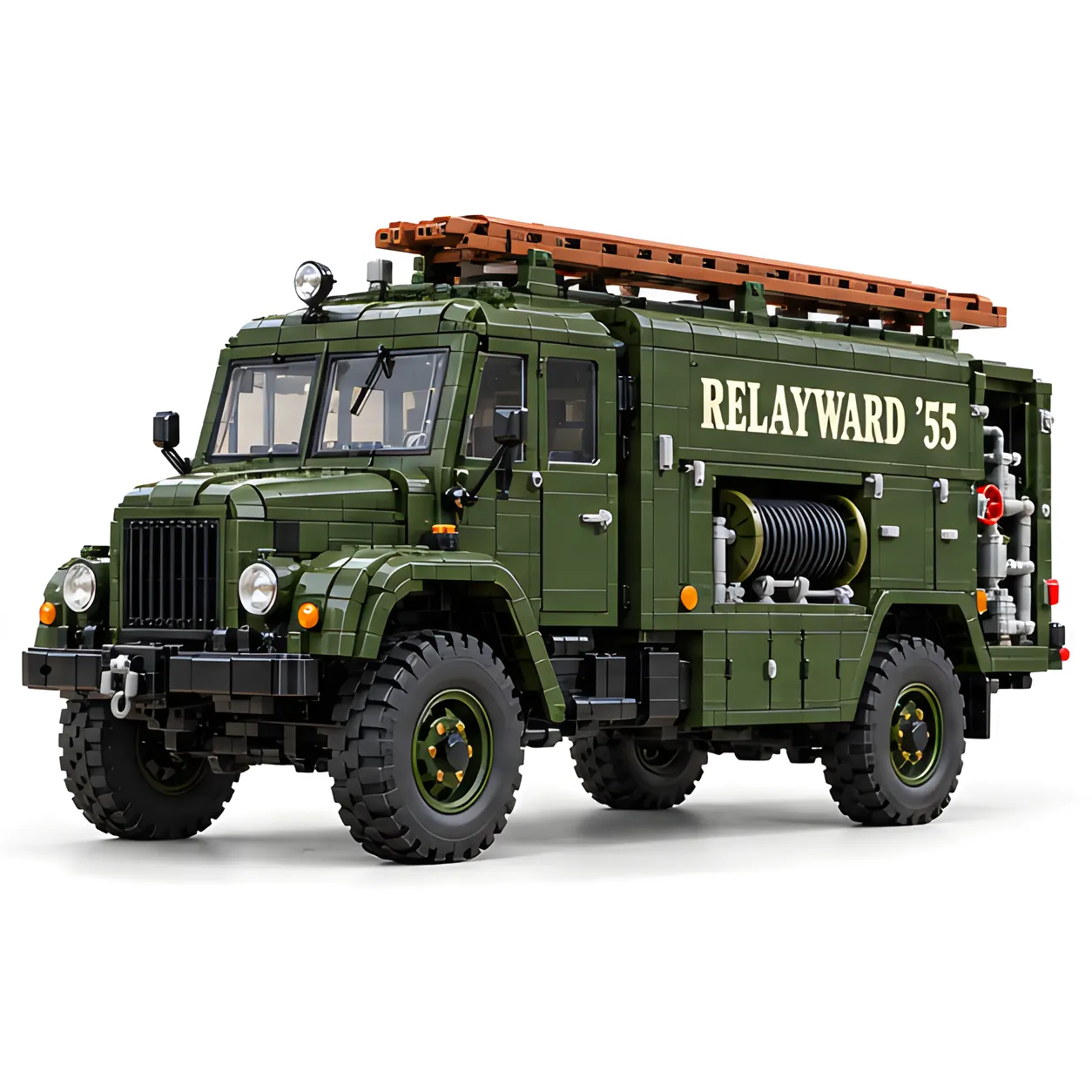
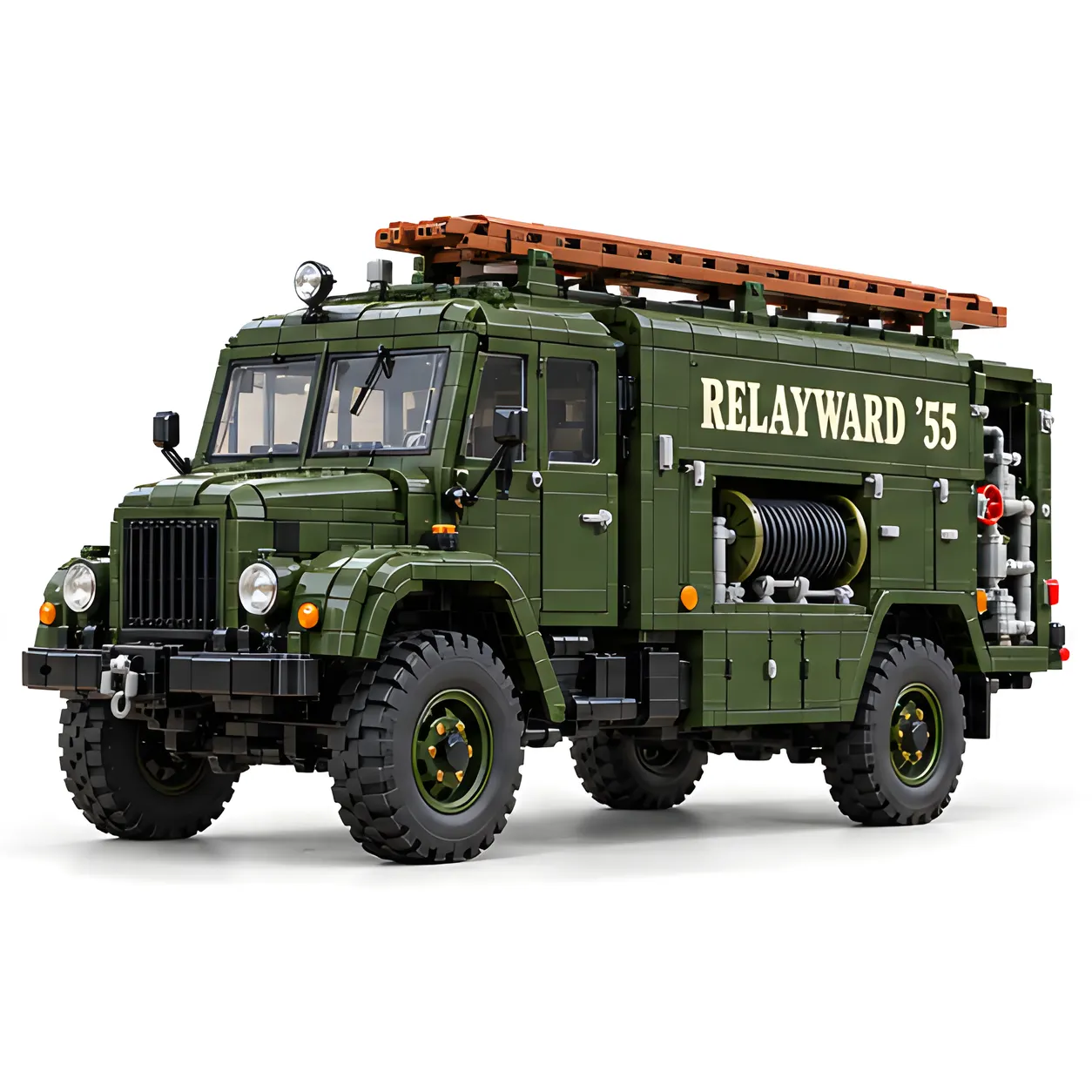
RELAYWARD '55 turns that purposeful shape into a hands-on brick build, with a tall black grille, round lamps, recessed hose reel, silver pipework, rugged single rear wheels, and a long brown ladder above the roof. It is aimed at adult fire-service, vintage-truck, and civil-defense enthusiasts who enjoy a detailed project with strong shelf presence.
Purposeful hardware, shared time, lasting shelf presence
What Makes This Rig Distinct
Its identity comes from visible working-truck hardware, not generic fire-engine styling.
Why the Shape Looks Different
See an olive-green emergency pump at a heritage event or in an old photograph, and the questions begin. Why the military color? Why the high 4x4 stance? Why is a hose reel set into the middle of the body instead of hidden behind a modern panel? Those details point back to a British civil-defense vehicle conceived for moving water during large-scale emergencies.
This build follows those answers through the tall vertical grille, round lamps, mid-body reel, silver plumbing, and long ladder carried above the roofline. As those sections come together, the subject shifts from something you noticed to something you understand with your hands—and then to a finished piece that can stay in view.
The hardware makes more sense once you know what the real pump was built to do.
Two Pairs of Hands, One Old-School Pump
Clear a table, spread out the pieces, and choose a first section. One person can sort the dark-green cab and utility panels while the other keeps the small silver fittings, black chassis parts, and brown ladder pieces within reach. The work stays easy to talk around because each section has a clear visual job.
As the upright grille, hose-reel opening, and long roof gear begin to line up, the shared project gains a recognizable identity. Finish the last details, turn the truck to its strongest side view, and give it a permanent place at home instead of clearing the whole evening away.
You remember who handled which section long after the loose pieces are gone.
Three Ways to Enjoy the Rig
The set has three distinct payoffs: shaping the truck-based nose, reading the civil-defense hardware, and keeping the finished profile in view.
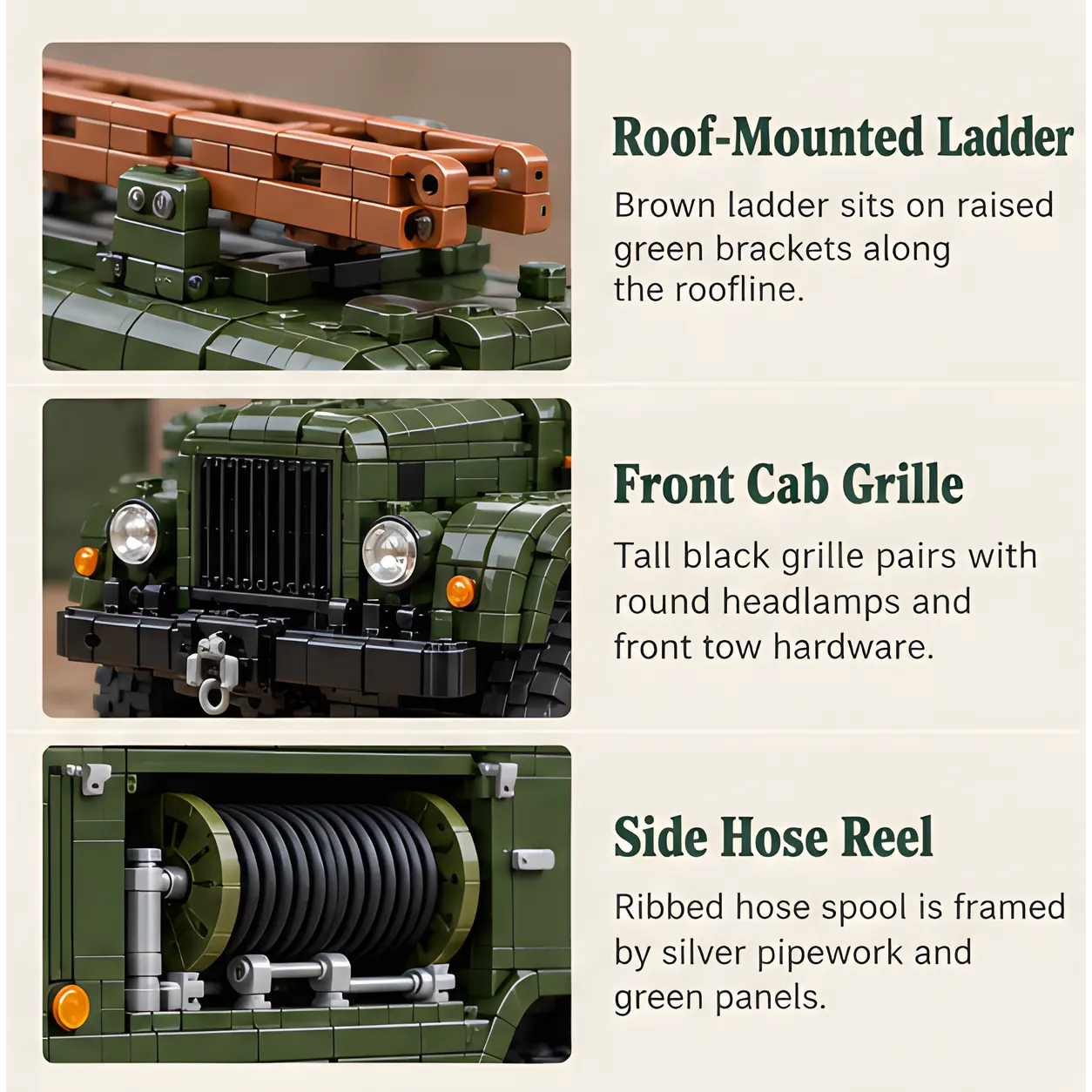
The black vertical grille, round headlamps, and separate fenders give the front end its unmistakably mid-century working-truck character.
The recessed center reel and silver plumbing echo the practical water-moving role that defined this type of 4x4 emergency pump.
The long brown ladder and bronze-green body create a strong horizontal silhouette that reads clearly from across a room.
Three Clues to the Real-World Purpose
Each close-up points to a different part of the vehicle's working history: access equipment above, truck-derived identity up front, and hose handling at the center of the body.
Watch the Profile Appear
Think of the build as three visual milestones rather than a race to the last piece.
Start with a clear surface and group the dark-green body pieces, black chassis elements, silver fittings, and brown ladder sections where you can see them.
The upright grille, round lamps, recessed reel, and raised ladder supports turn a general truck shape into this specific mid-century emergency-pump silhouette.
Once the long ladder line and side plumbing are complete, turn the truck to the view that best shows the tall cab nose and open reel bay.
After the Last Section Clicks Into Place
The finished set earns its footprint through a shape that is hard to confuse with a modern pumper: long hood, upright grille, bronze-green utility body, and ladder gear running almost the full roofline.
A Physical Project for the Evening
Set the screens aside long enough to sort green panels, line up the tall grille, and shape the hose-reel body section together. It is simply a physical project with visible progress, conversation, and a finished truck you can leave on the shelf.
For Civil-Defense and Fire-Service Enthusiasts
Choose RELAYWARD '55 for a birthday, retirement, holiday, or milestone when the recipient already notices vintage fire pumps, civil-defense vehicles, or working-truck details such as center hose reels and roof ladders. It is especially suited to adult collectors who prefer a project over a passive display piece.
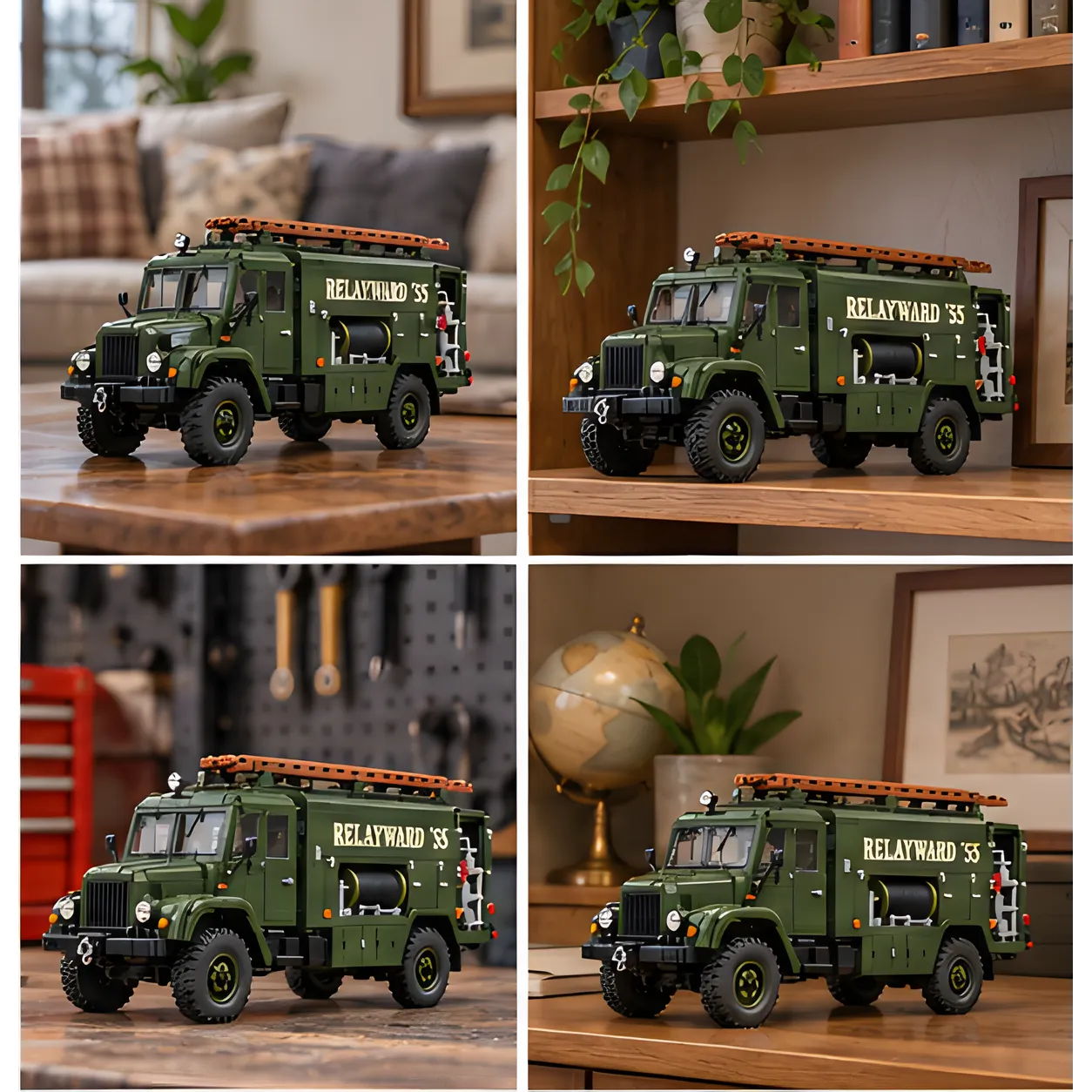
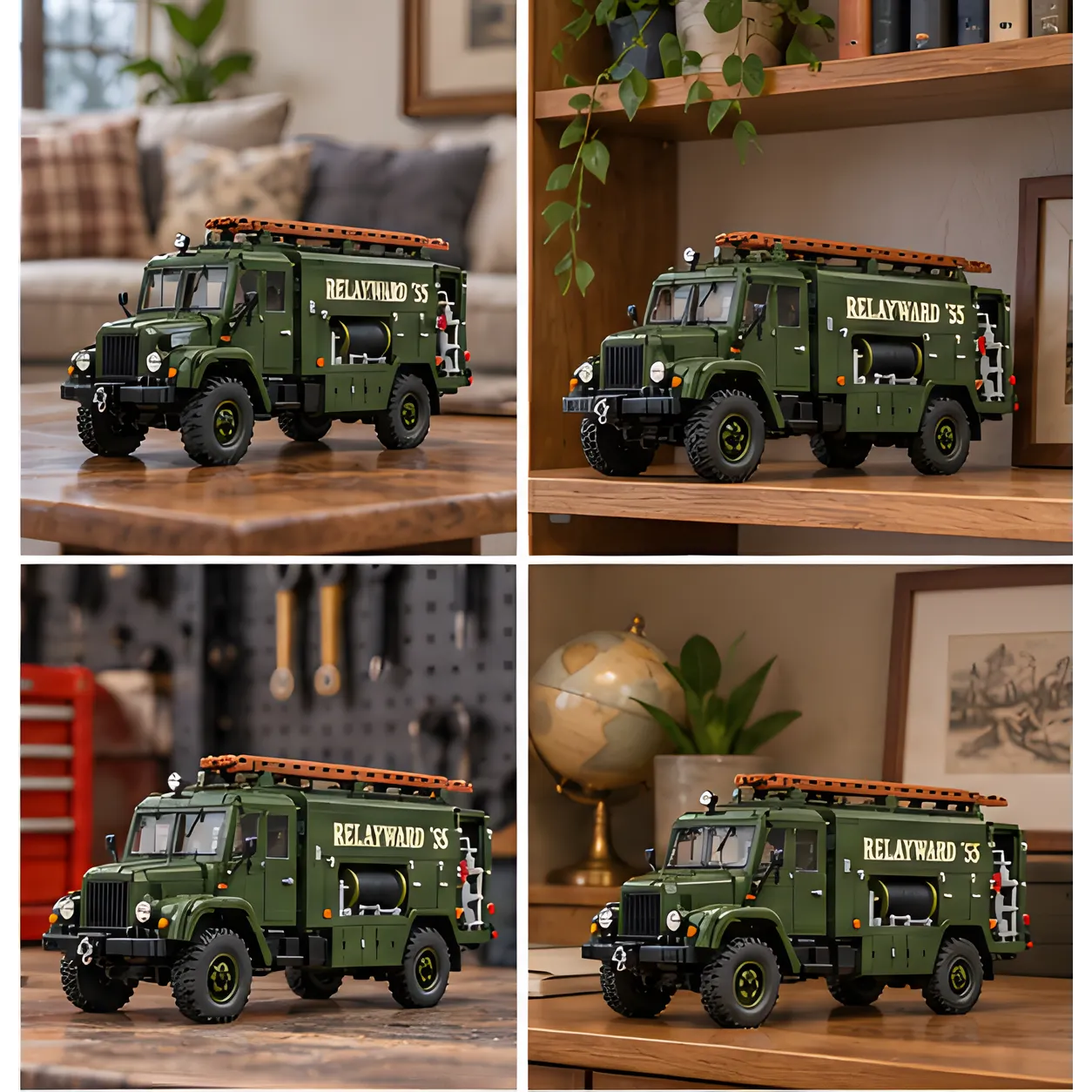
The value comes in two parts: first, there is the time spent sorting green bodywork, silver fittings, and ladder sections; then there is the finished 4x4 profile, with its tall grille and recessed reel, ready to keep on a desk, shelf, or cabinet.
A project to finish, a distinctive rig to keepGOOD TO KNOW
It is a brick building set designed to be assembled piece by piece. The finished truck shown on the page represents the completed build.
Look for the bronze-green 4x4 stance, tall vertical grille, round headlamps, recessed center hose reel, exposed silver pipework, and long brown ladder carried above the roof.
Yes. The long ladder line, upright cab, rugged tires, and open reel bay give the finished set a strong side profile for a shelf, desk, cabinet, or home office.
Yes. Adults can divide the cab, utility body, fittings, and ladder sections and bring them together as the truck takes shape. The set contains small building pieces, so younger children should only take part with close adult supervision.
It suits adult fire-service enthusiasts, vintage-truck fans, civil-defense history collectors, and brick builders who appreciate unusual working vehicles with recognizable equipment details.
Yes, it's perfectly compatible with LEGO bricks!
One Last Look at the Green Pump
The long brown ladder, center-set hose reel, tall-nose cab, and bronze-green body make the finished set distinct; assembling those sections yourself is what turns an old emergency-pump shape into a memory worth keeping in view.
THE BUILD JOURNEY
Explore the six steps that bring every build to life.

Every build begins with an idea, refined through sketches and digital models.

Colors, textures, and individual pieces come together to shape the design.

The design takes physical form, with attention to each piece and connection.

Parts are sorted and counted, ready for a clear, organized building experience.

Pieces and instructions are brought together in a set ready to open and enjoy.

The finished set is packed for its next destination: your building table.
Process images are for illustration only.
BUILT FOR CURIOUS MINDS
Discover the details. Enjoy the build. Display what you create.
Connect each piece and enjoy seeing your model take shape, one detail at a time.
Explore distinctive forms and small details that give the finished model its character.
Take time to build, discover how it all fits together, and create something to display.
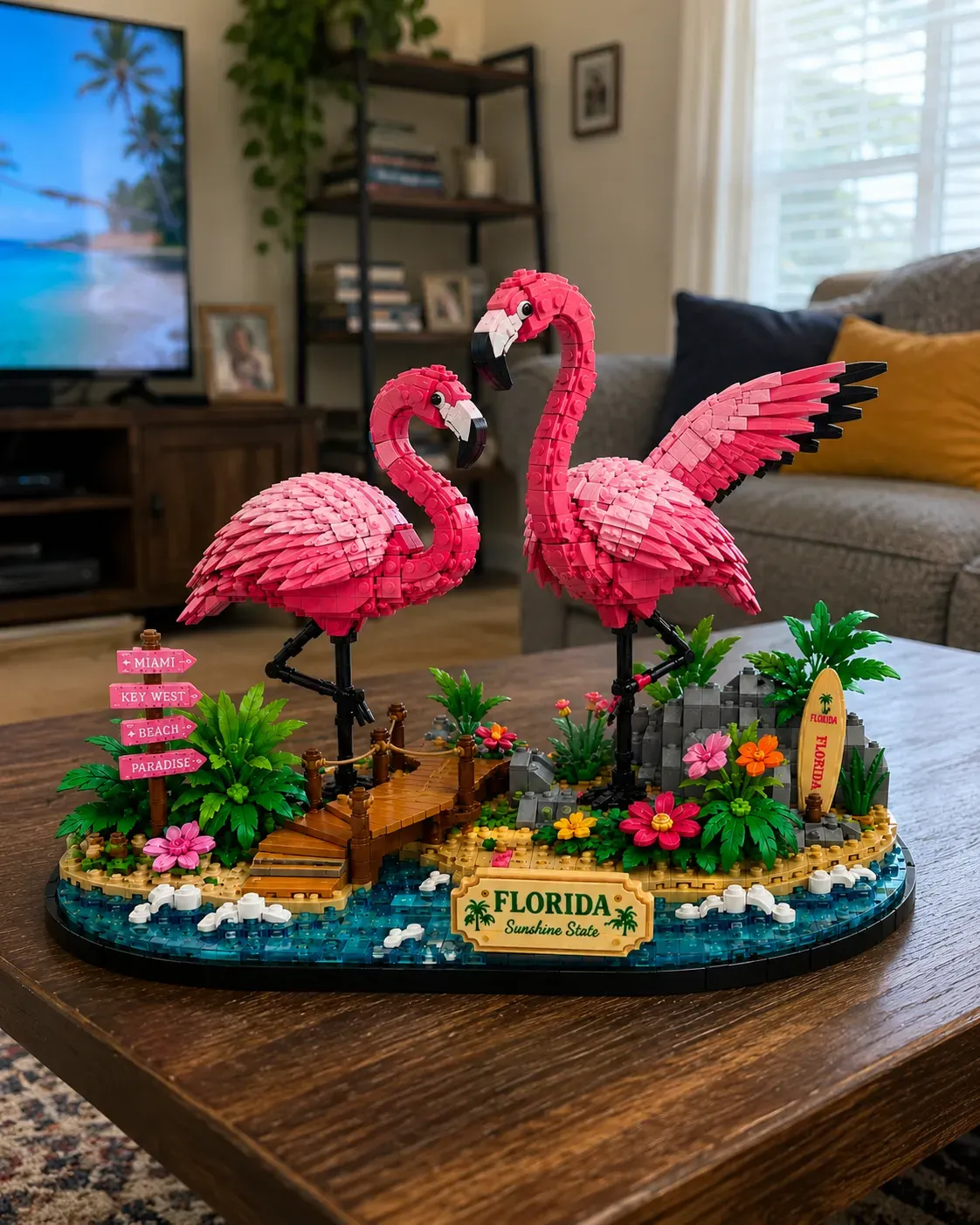
“The colors make this such a cheerful display. Watching the scene come together was my favorite part of the build.”— Olivia Bennett
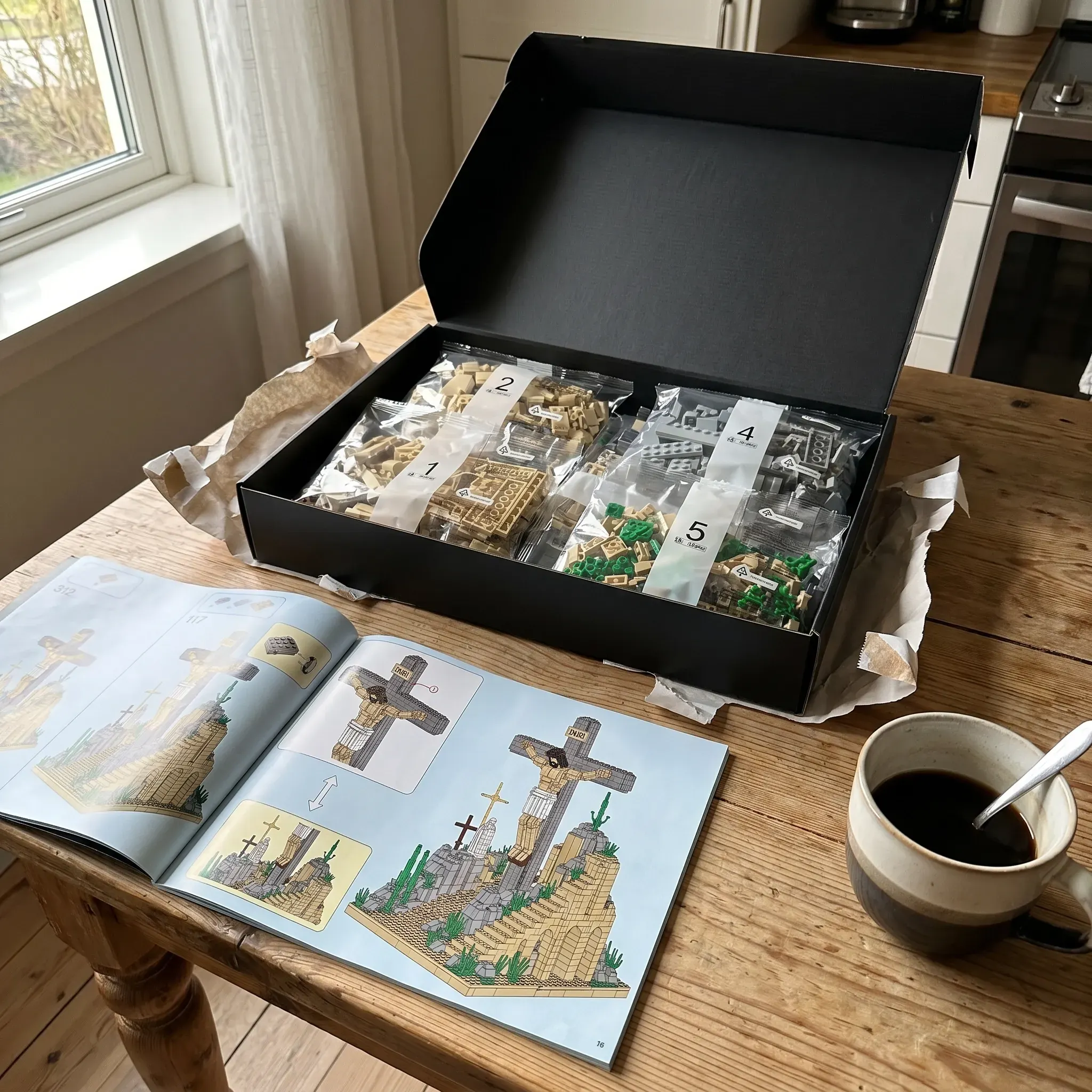
“A relaxing project for a quiet afternoon. I liked taking my time with the small details and seeing the finished result.”— Ethan Carter

“The character has so much personality on the shelf. Some of the tiny pieces took patience, but I enjoyed the challenge.”— Sophia Reed
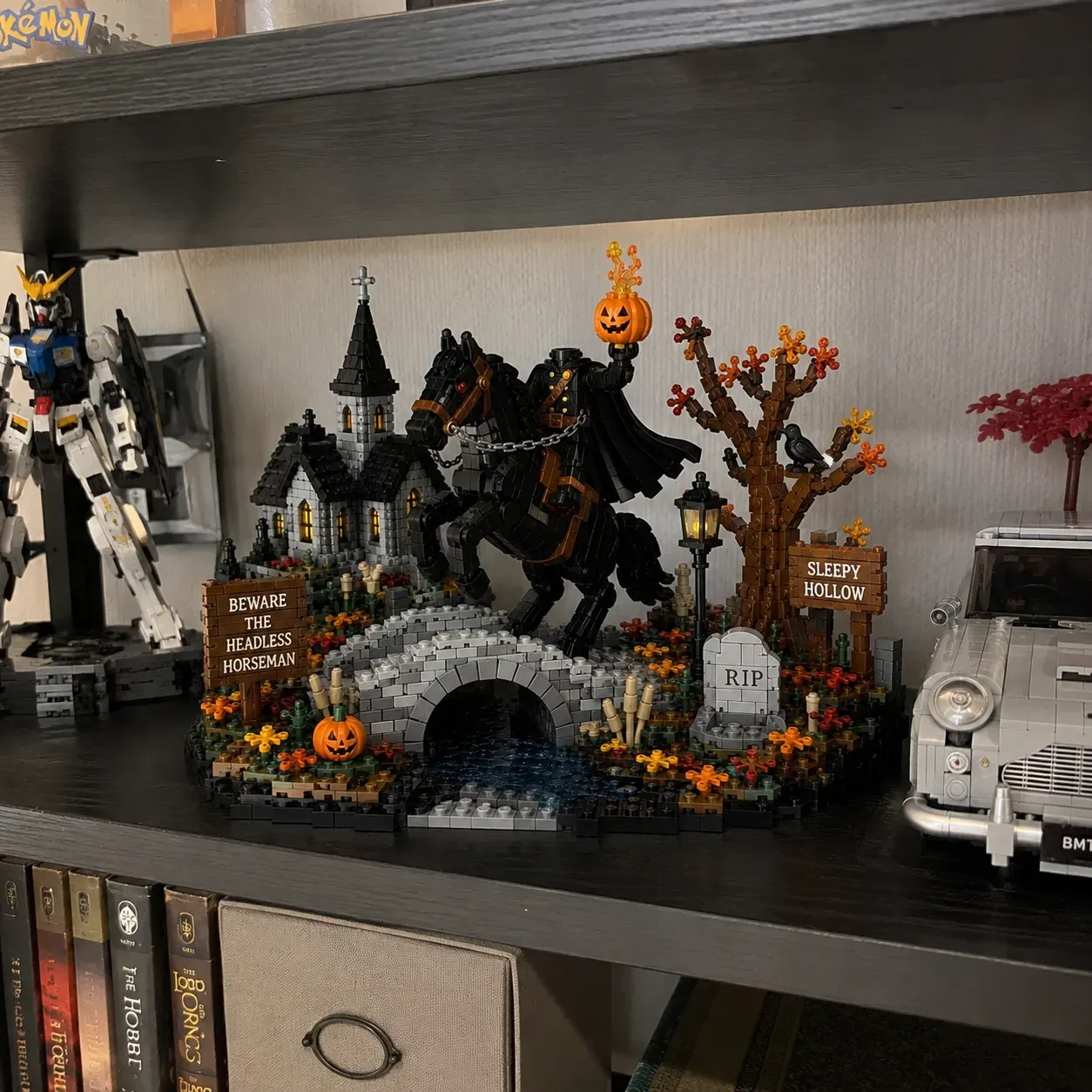
“There are little details to discover throughout the scene. It was a fun seasonal project to put together and display.”— Lucas Morgan
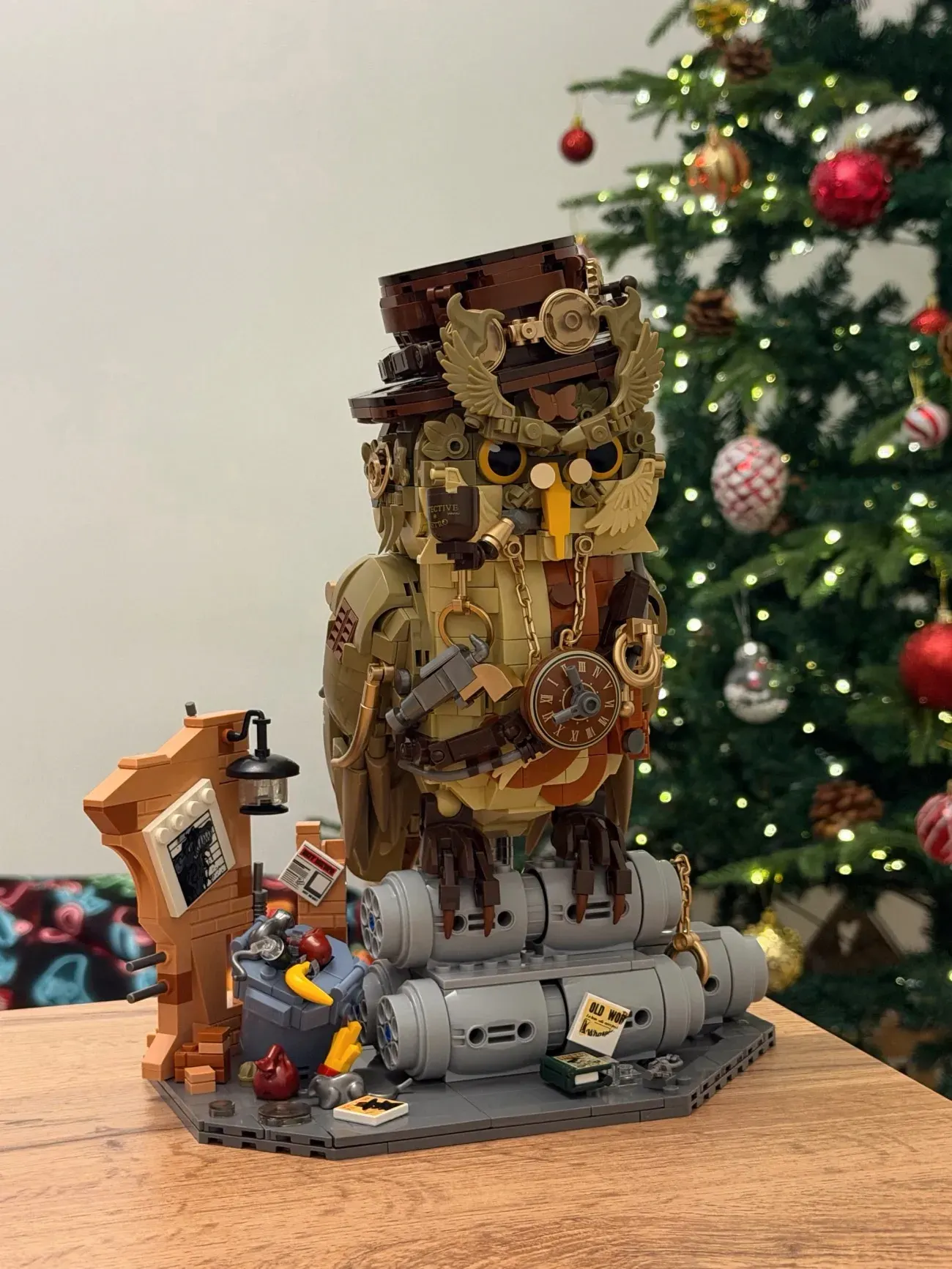
“The layered details give the owl a distinctive look. It has become an eye-catching piece in my collection.”— Emma Hayes
loading